
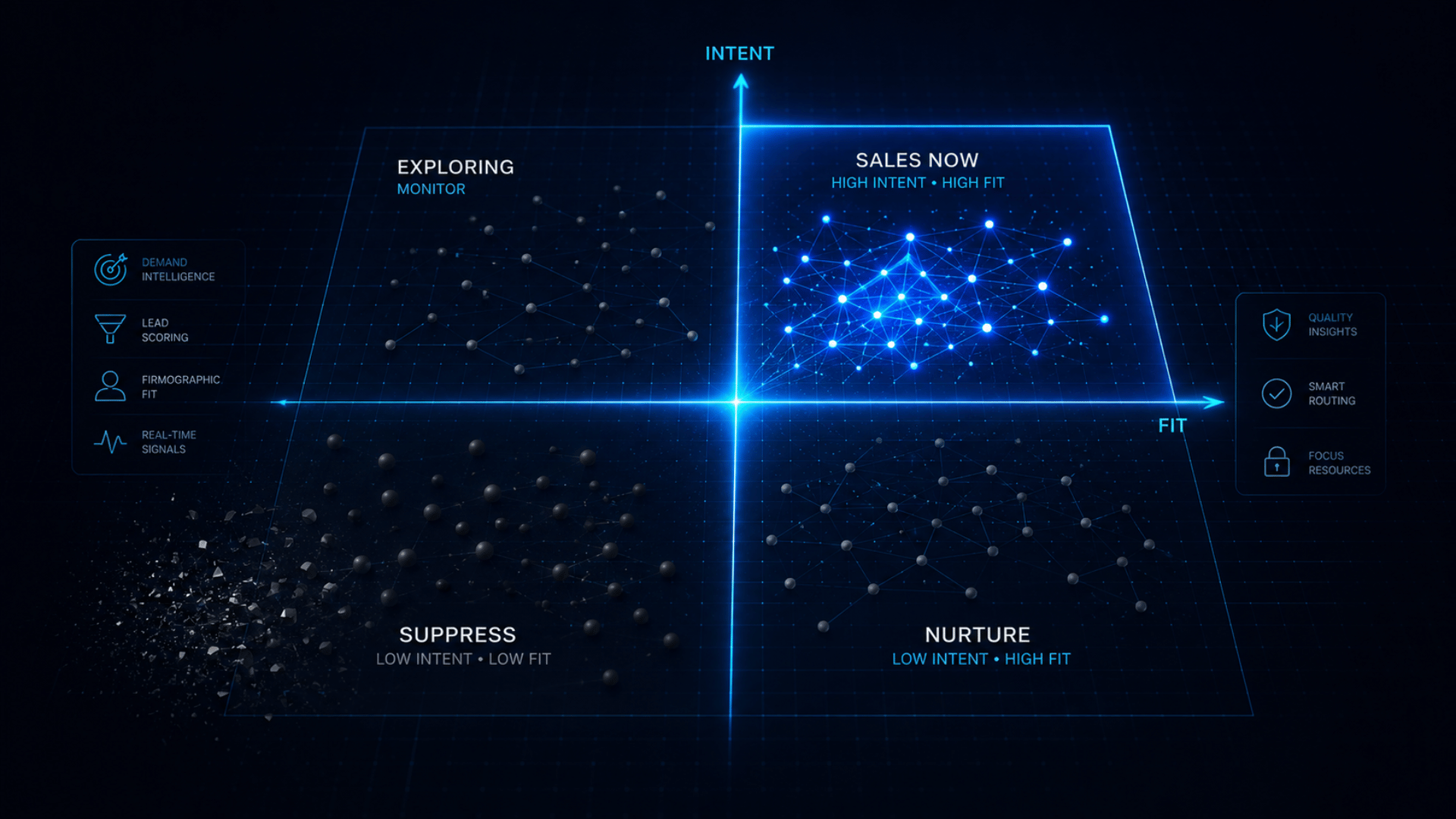
Intent vs. Fit: How to Categorize Leads into "Sales Now" and "Suppress
Every single morning, sales development representatives (SDRs) around the world log into their CRMs and face the exact same frustrating question: Who should I actually reach out to first today? Left to their own devices, most reps will default to whatever feels easiest. They will browse through a massive list of new contacts, look for familiar brand names, or pick the accounts that happen to sit at the top of their alphabetized view. It is a completely unstructured, manual process that forces your team to treat every single record in your database as if it holds the exact same value.
But in a modern B2B sales engine, treating all leads equally is a recipe for operational failure. It floods your team's calendars with empty activity, inflates your customer acquisition cost, and leaves your highest-probability accounts rotting in a neglected corner of your CRM.
To build a high-velocity revenue engine, you have to completely remove this daily guesswork from your team’s workflow. You need to transition away from manual list-checking and implement a rigorous, objective filtering system based on the intersection of two critical dimensions: Intent and Fit.
By charting every inbound and outbound record on an Intent-versus-Fit matrix, your system can automatically categorize incoming accounts into explicit, unyielding action paths. This process strips away the human bias and ensures your reps spend every working hour focusing on accounts that are ready to buy right now, while ruthlessly filtering out the noise.
The Two Core Dimensions of the Matrix
To build this automated routing logic inside your tech stack, you must first understand the fundamental difference between the two core variables that dictate lead quality:
1. The Fit Metric (Who They Are)
Fit measures an account’s structural alignment with your validated ideal customer attributes. This is entirely binary and firmographic. Does this company possess the exact organizational traits that make them a perfect match for your solution? You look at explicit parameters like their exact headcount tier, their current software engineering infrastructure, their geographic operating region, and whether the primary contact holds the economic decision-making title. If an account matches these criteria, it is a High-Fit lead. If it misses these parameters, it is structurally out-of-profile.
2. The Intent Metric (What They Are Doing)
Intent measures an account’s active, real-time behavioral signals. It tells you whether a company is actively looking for a solution to their problem right now. Intent signals are split into two categories:
First-Party Intent: Tracking behaviors occurring directly on your own digital properties. This includes actions like a prospect repeatedly visiting your pricing page, consuming a technical product guide, or filling out a pre-intervention audit survey.
Third-Party Intent: Looking at broader web behavior. This involves monitoring whether an organization is suddenly searching for specific B2B software categories or researching competitive alternative reviews on platforms across the open web
Mapping the Four Operational Buckets
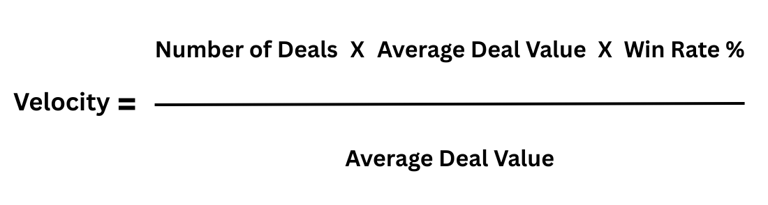
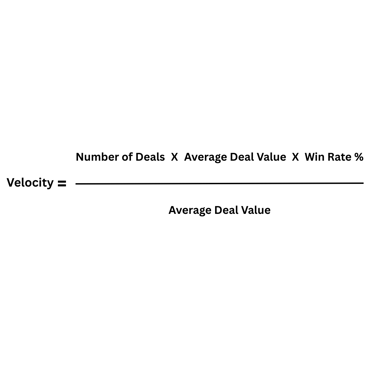
Once your historical deals are cleanly sorted into these cohorts, you need to measure how each group actually performed using a strict mathematical framework. For every single cohort, calculate their performance using the pipeline velocity formula:
Let’s break down exactly how this math exposes the hidden leaks in your sales strategy. Imagine you are comparing two distinct customer cohorts that you currently treat with equal priority in your outbound sequences:
Cohort A: The Marquee Enterprise Target
Average Deal Value: ₹25,00,000
Win Rate: 10%
Sales Cycle Length: 300 days
The Math: (1x25,000x0.10)/300 = ₹833 per day
Cohort B: The Mid-Market Operator
Average Deal Value: ₹7,50,000
Win Rate: 35%
Sales Cycle Length: 45 days
The Math: (1x7,50,000x0.35)/45 = ₹5,833 per day
When you look at this data through a purely emotional lens, Cohort A looks like the obvious winner. It delivers a massive contract value that looks fantastic in a board meeting. But when you apply the velocity equation, the truth comes out: Cohort B generates over seven times more revenue per day inside your sales funnel than Cohort A. Cohort B represents your path of least resistance. They make decisions quickly, navigate internal procurement with minimal friction, and close fast. Cohort A, despite the big numbers, is an expensive operational drag that consumes months of your team's focus and keeps your capital tied up in an unpredictable pipeline.
Mapping the Four Operational Buckets
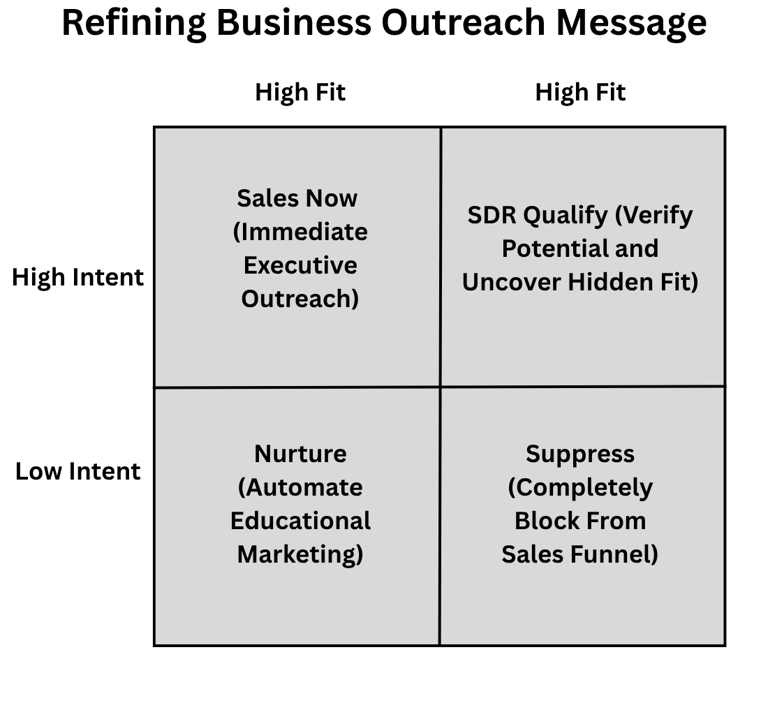
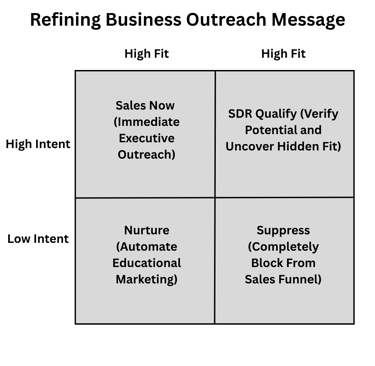
When you cross-reference these two dimensions, your CRM can instantly route every incoming record into one of four highly targeted operational buckets:
1. High Fit + High Intent = "Sales Now"
This is your absolute gold standard. These are companies that perfectly match your validated target profile and are actively demonstrating real-time buying signals. They are visiting your high-conversion web pages, downloading your toolkits, or researching your specific niche.
These records require immediate human intervention. Your CRM must bypass standard delay queues, flag the account with highest priority, and drop it directly onto a rep's desk. The outreach needs to happen within minutes, utilizing hyper-personalized messaging that directly speaks to the active operational pain they are trying to solve right now.
2. Low Fit + High Intent = "SDR Qualify"
These accounts are demonstrating massive engagement, but on paper, they look like a bad fit. This often happens when a smaller startup or an unmapped organization starts heavily consuming your content.
Do not pass these straight to an executive demo, but do not throw them away either. Assign these to an SDR for a brief qualification touchpoint. The goal here is simple: investigate whether there is a hidden fit. Is this small company about to close a major funding round? Is the person downloading your resources a champion who just moved from a massive enterprise account? Use a quick conversation to verify if they warrant an upgrade or belong elsewhere.
3. High Fit + Low Intent = "Nurture"
These companies look absolutely beautiful on paper. They match your target size, run the exact tech stack you integrate with, and feature the perfect decision-maker titles. However, they aren't doing anything. They aren't looking for software, they haven't visited your site, and they have zero active market triggers.
If your reps spend their days cold-calling these accounts, your pipeline velocity will stall out. They aren't ready to buy. Instead, route these records into a long-term, automated marketing track. Keep your brand top-of-mind by sending them high-value, educational industry insights. The moment they show a sudden spike in behavioral intent, your system will automatically pull them out of nurture and upgrade them to a live sales sequence.
4. Low Fit + Low Intent = "Suppress"
This is the most critical bucket for protecting your startup's daily productivity. These are the tire-kickers, the generic students, the mismatched service providers, and the tiny companies that will never have the budget or scale to utilize your platform.
Your architecture must handle these ruthlessly by putting them into Suppress. This means they are completely blocked from entering your sales team's outreach sequences. They do not get assigned to an SDR, they do not receive manual follow-ups, and they are completely removed from your active outbound pipeline. By automatically suppressing the noise, you build a digital gatekeeper that preserves your human capital for accounts that actually impact your bottom line.
Hardcoding the Rules Into Your Tech Stack
To make this framework stick, you cannot rely on your sales team's memory. You must hardcode these exact definitions into your CRM using custom workflow automation.
Set up clear, programmatic scoring rules inside your data stack. Let the software calculate the fit score based on firmographic properties, track the real-time behavioral signals, and automatically update a lead-status field to show either Sales Now, SDR Qualify, Nurture, or Suppress.
When your technology stack automatically enforces these boundaries, your sales engine transforms. Your reps stop wasting time debating data and start execution with complete clarity—focusing 100% of their energy on high-velocity revenue opportunities.
📌 Next Step in the Architecture
Now that you know how to build a digital gatekeeper inside your CRM to automatically categorize your leads, you need to make sure the core variables powering your system are actually accurate. Automated routing only works if you are tracking the right baseline variables.
Choose your next deep dive to refine your GTM data layer:
The Behavioral Risk: Discover the underlying operational metrics you must track to stop your reps from falling for false signals. Read the strategic analysis: The Danger of Gut-Feeling Sales: 3 Data Points Every Founder Must Validate
The Foundation Math: Learn the exact pipeline equation required to calculate the velocity values for your high-fit customer cohorts. Read the tactical guide: How to Analyze Historic Sales Velocity to Find Your Highest-Value Persona
Your Sales Growth Partner
Contact US
Subscribe
sales@salesnair.com
India:
© 2026. All rights reserved.
GroRev SalesNair


GroRev SalesNair LLP (USA)
10685-B Hazelhurst Dr. # 43483, Houston, TX 77043, USA


Accepted payment Methods
GSTIN: 06ABBFG6113A1Z5
LLP Identification Number: ACI-7240
Policies
GroRev SalesNair LLP (INDIA)
B6-701, KLJ Greens,
Sector -77, Faridabad
Haryana -121004
USA:
GroRev SalesNair LLP (INDIA)
IDEASHACKS, Metro Pillar Number 564, 14/3, Mathura Rd, Sector 31, Faridabad, Haryana 121003